Stop Sending Generic Follow-Ups. Start Building Customer Relationships with Video.
Philip Ly, Founder & CEO · October 19, 2026 · 14 min read
Why the future of automotive sales depends on making every digital interaction more personal.
I have spent years working with automotive dealerships to improve how they present vehicles online and communicate with potential buyers. During that time, I've watched our industry invest enormous amounts of money in advertising, lead generation, CRM platforms, digital retailing tools, and now artificial intelligence. Yet despite all those investments, I continue to see one fundamental problem that hasn't gone away.
We are getting better at generating customer activity, but we aren't always getting better at creating customer relationships.
That distinction is becoming increasingly important as consumers spend more of their shopping journey online, often researching multiple vehicles and dealerships before ever speaking with a salesperson. By the time someone submits an inquiry, they may have already spent hours studying the vehicle, evaluating alternatives, and deciding whether a particular dealership deserves their business.
And what do we do when that customer finally raises their hand?
Too often, we send them another generic email.
Recently, I've been following some interesting conversations on LinkedIn about the role of personalized video in automotive sales. Automotive professionals such as Seth Dustin and Christopher Meneses have been discussing how a simple 30- to 45-second video can create a much stronger connection than traditional template-driven communications.
I believe they're addressing one of the biggest opportunities facing automotive retailers today. And it's a subject that connects directly to what we've been building at LESA and the conversation we brought to CXAUTO 2026 in Detroit.
The Customer Experience Begins Before the Customer Reaches Your Dealership
At CXAUTO 2026, I participated in a panel titled "The Digital Showroom Experience — Why Today's Car Shoppers Need More Than Photos." The discussion, moderated by Peter Martin of Cactus Sky Digital, also featured Jacob Nelson of OneAutomotive and Scott Keeler of Murdock Auto Team.
The central issue we explored was how technology, interactive video, and richer vehicle information can help dealerships create a better online shopping experience.
One of the beliefs I brought to that discussion is that a dealership's website is no longer simply a marketing tool designed to get someone into the showroom. For many consumers, the website is their first showroom.
Think about how people shop today. They research vehicles on their phones, compare models, watch videos, explore financing options, and evaluate dealership reputations before they ever schedule an appointment. They expect to be able to see what they're buying, understand the product, and gather enough information to make an informed decision.
Unfortunately, many dealership websites still present vehicles primarily through static photographs, specifications, and pricing information. Those elements are important, but they don't necessarily give customers the experience they're looking for.
A photograph can show someone what a vehicle looks like. A video can help them understand what that vehicle feels like, how its features work, and why it might be the right choice for their needs.
That difference matters because automotive retailing isn't simply about providing information. It's about helping people become comfortable enough with a major financial decision to take the next step.
At LESA, we've focused on making that online experience more interactive and useful. Our VIN-specific inventory videos help customers explore the actual vehicles they're considering. LESA Spotlight allows shoppers to navigate directly to features or areas that interest them. Ultra 360 provides an interactive way to examine a vehicle, while Damage Tagging helps communicate vehicle-condition information more transparently, particularly on pre-owned inventory.
Each of these capabilities addresses a different aspect of the same challenge: reducing uncertainty and giving shoppers greater confidence.
But there's another part of the customer journey that deserves just as much attention.
What happens after the customer submits a lead?
A Fast Response Is Important. A Meaningful Response Is Better.
One of the most interesting points in the recent LinkedIn discussions is the difference between responding quickly and responding personally.
Our industry has spent years emphasizing lead-response time. We've built sophisticated systems to make sure customers receive an email or text message almost immediately after submitting an inquiry.
I support that objective. Customers shouldn't have to wait hours for someone to acknowledge their interest.
But there's a significant difference between acknowledging a lead and engaging a customer.
Imagine a shopper who has spent 20 minutes researching a particular pre-owned SUV. They have examined the pictures, reviewed the equipment, and submitted a question about the vehicle's condition.
Seconds later, they receive an automated message thanking them for their interest and asking when they would like to come in for a test drive.
Technically, the dealership responded.
But did it improve the customer's experience?
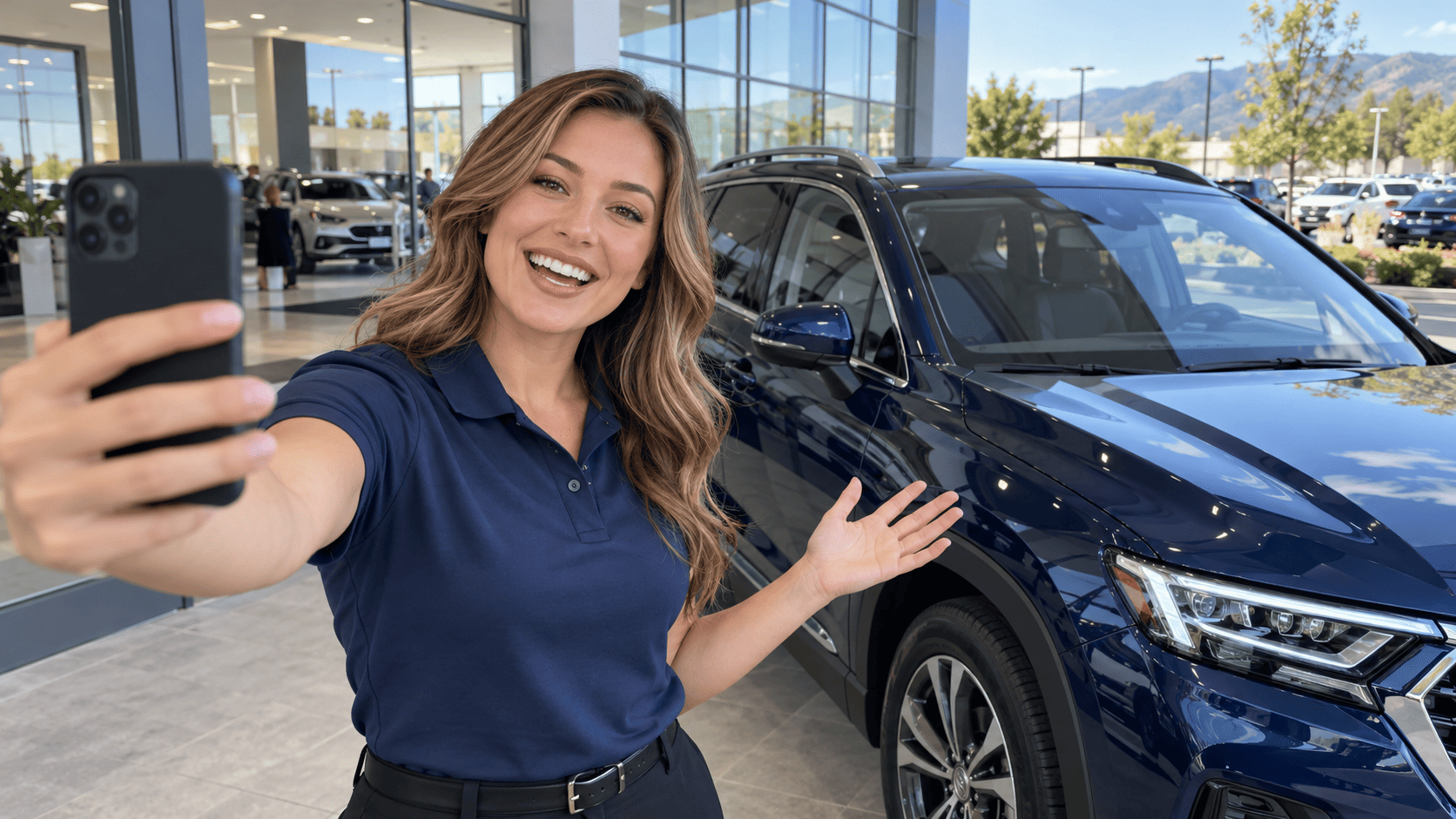
Now imagine that same customer receiving a short video from a salesperson who introduces themselves, acknowledges the exact SUV, shows the vehicle, and addresses the customer's question.
Even if that video takes a little longer to arrive, it provides something the generic message didn't: evidence that someone is paying attention to what matters to that particular customer.
That is the real opportunity behind personalized video.
We're not just trying to communicate faster. We're trying to communicate better.
Why a Short Video Can Make Such a Big Difference
Seth Dustin recently made an excellent point on LinkedIn about how a short personalized video can accomplish something several carefully written templates cannot. It helps demonstrate that a real person is paying attention to the customer.
Christopher Meneses has raised a similar issue, particularly around what happens between scheduling an appointment and the customer's actual arrival at the dealership.
I agree with the thinking behind both discussions.
Customers don't necessarily want another marketing message. They want confirmation that they've made the right decision about whom to contact.
A personalized video can make that interaction feel more authentic. The salesperson becomes a recognizable individual rather than just another name in an email signature. The customer can see the vehicle they're interested in, hear an explanation, and develop some familiarity with the person they may soon meet.
There's another benefit that I believe deserves more attention. Vehicle purchases frequently involve more than one decision-maker. A shopper may want to discuss a vehicle with their spouse, family member, or friend. Video gives them something meaningful to share beyond a vehicle listing or a collection of photographs.
And if that video answers a specific question or demonstrates an important feature, it becomes part of the customer's decision-making process.
That is a very different role from simply sending another message asking whether someone is still interested.
The purpose of personalized video shouldn't be to pressure someone into making an appointment. It should be to provide useful information, develop trust, and give the customer a reason to continue the conversation.
The Real Challenge Is Not Recording Video. It Is Getting Every Salesperson to Use It.
Here's where things become interesting.
Most dealers do not need to be convinced that video has value. In fact, many already have the ability to record and send videos through their existing CRM. Platforms such as CDK eLeads, DriveCentric, and Tekion have made video capture accessible to salespeople. That is progress, but having the capability and using it consistently are two very different things.
The question I hear from dealers is no longer simply, "Can my team send a video?" It is, "How do I make sure video becomes part of the process for every salesperson and every relevant customer interaction?"
Some salespeople are comfortable on camera and immediately see the opportunity. Others are reluctant to record themselves, struggle to find the time, or are unsure what to say. Even strong adopters can become inconsistent when the showroom gets busy, leads pile up, or a customer asks about a vehicle that has not been filmed. Managers can mandate video activity, but another task on a checklist is not the same as an effective customer experience.
There are also practical issues: creating a useful vehicle presentation takes time, the quality varies from salesperson to salesperson, and recording the same basic information repeatedly is inefficient. When hundreds of inquiries are flowing through a dealership, those small points of friction become a real barrier to adoption.
This is the problem we are working to solve at LESA. Rather than expecting every salesperson to become a videographer, we want to make relevant vehicle video easier to access, personalize, and use as part of everyday customer communication.
The LESA Dealer Video Suite is designed to support sales and BDC teams with video communications, while the dealership's VIN-specific walkaround library provides reusable content about actual vehicles. A salesperson can focus on the customer's question and relationship instead of starting every vehicle presentation from scratch. The objective is not to replace the salesperson's personal introduction; it is to make the complete video experience more practical for the entire team.
That is an important distinction from simply adding a record-video button to a CRM. The button is useful, but it does not solve the challenges of inventory coverage, content consistency, repeatable processes, and adoption across an entire sales department.
We also recognized that scaling this approach requires more than a library of videos. Dealerships need ways to connect relevant content with customer inquiries without introducing unnecessary work for the sales team.
That thinking led to the development of RapidReply AI, which we introduced at NADA 2026.
RapidReply AI is designed to support personalized vehicle-video communications through AI-assisted workflows. The idea is to help dealerships use relevant video content more consistently, rather than requiring every interaction to begin with a new recording. That is the direction we believe makes video easier for more salespeople to embrace.
For me, the opportunity is not to claim that LESA invented personalized video. We did not. It is to address the gap between the video tools dealers already have and the consistent, relevant video experience they want customers to receive.
Rather than using technology simply to generate another generic response, we should use it to deliver information that is more relevant to the customer and the vehicle they're considering.
And we need to be careful about how we define personalization. Putting someone's first name into a standard message isn't the same thing as understanding their needs. True personalization should reflect the vehicle they selected, the information they're seeking, and where they are in the buying process.
AI should help dealerships accomplish that at scale while preserving the authenticity, accuracy, and human accountability that customers expect.
Video Should Connect the Entire Shopping Journey
One of the points I want dealers to consider is that video shouldn't begin when a lead arrives in the CRM.
It should begin much earlier.
When a customer visits a dealership website, they're already forming impressions about the vehicle, the dealership, and the overall buying experience. That's why we've invested in inventory video, interactive vehicle presentations, and technologies that help shoppers explore the features and condition of specific vehicles.
But if we provide an engaging video experience on the Vehicle Detail Page and then switch to impersonal communication once the customer submits a lead, we've interrupted that relationship.
The experience should be connected.
A shopper who has spent time exploring a vehicle online should receive follow-up that acknowledges that interest. If they want to see a particular feature, the dealership should be able to help them see it. If they schedule an appointment, a personalized video can introduce the salesperson and reinforce what the customer can expect when they arrive.
And if the customer visits but doesn't purchase, video can help continue the conversation by answering unresolved questions or demonstrating an alternative vehicle.
What we are describing is not another stand-alone video-recording feature. It is an approach to making vehicle video more useful and repeatable across the customer journey.
LESA connects rich digital merchandising, reusable VIN-specific vehicle content, sales-team video tools, and AI-assisted communications. A CRM may make it easy to record a personal greeting; our focus is helping the dealership build on that greeting with relevant vehicle content and a process that more of the team can realistically follow.
The goal is continuity: a customer who explored a particular vehicle online should not lose that rich experience when the conversation moves to the sales department. Just as importantly, the process should not depend on whether the assigned salesperson happens to be comfortable recording a new walkaround that day.
Dealers Need to Measure More Than Video Views
Whenever we discuss new technology in automotive retailing, I think we need to bring the conversation back to business performance.
We can talk about video engagement, view rates, and the number of messages delivered. Those are useful indicators, but they don't necessarily tell us whether we're improving dealership results.
The questions I believe dealers should be asking are more meaningful.
Are more shoppers responding to our communications? Are we generating better conversations? Are customers more willing to schedule appointments? Are more of those appointments actually showing up? And ultimately, are we improving conversion and selling more vehicles?
We've discussed the sales and appointment-show-rate improvements associated with video-enabled workflows at LESA, including results highlighted in our RapidReply AI marketing. Those outcomes are encouraging, but every dealership should evaluate performance against its own baseline, customer mix, and execution.
The technology alone doesn't create the result. How consistently the dealership uses it, how relevant the content is, and whether the sales team follows through all matter.
That's why I encourage dealers to view video as part of a measurable process rather than simply another piece of marketing content.
A video that earns a customer response, helps answer a question, and supports a successful appointment has accomplished something far more valuable than generating another impression.
AI Should Help Us Become More Personal, Not Less
As artificial intelligence becomes more deeply integrated into automotive retailing, we're going to see increasingly sophisticated tools for communicating with customers.
We'll be able to produce more content, automate more interactions, and respond to opportunities with greater speed.
I see tremendous potential in those capabilities.
But I also believe we need to be thoughtful about the experience we're creating.
If the end result of all this technology is that customers receive more automated messages that don't answer their questions, we haven't made meaningful progress.
We've simply made the same problem more efficient.
The real opportunity is to combine the strengths of automation with the qualities that make a good salesperson valuable: product knowledge, relevance, responsiveness, and the ability to build confidence.
Sometimes that means a salesperson taking 30 seconds to record a personal introduction. Sometimes it means using an existing VIN-specific vehicle video to answer a customer question. And sometimes it means leveraging AI-assisted technology to help deliver the right content at the right point in the customer's journey.
These approaches shouldn't compete with one another. They should work together.
That's the philosophy behind the technology we're building at LESA.
I don't believe dealers need more complicated processes. They need tools that make the right processes easier to execute.
The Next Competitive Advantage Is Making Video Consistent, Not Just Available
When I look at where our industry is heading, I believe we're approaching an important shift.
For years, dealerships have competed aggressively to generate more leads, attract more website traffic, and increase their advertising reach.
Those activities will always matter.
But before investing in another campaign to generate more prospects, I think dealers should examine what happens to the customers who are already expressing interest.
Are we giving them enough information to make a decision? Are we responding to what they actually asked? Are we presenting the vehicle in a way that builds confidence? And are we making it easier for them to develop a relationship with our dealership?
These are questions we discussed in the context of the digital showroom at CXAUTO, and they're closely connected to the conversations happening on LinkedIn today about personalized video.
To me, the message is clear.
Giving every salesperson the ability to record video was an important first step. Helping every salesperson use video consistently and meaningfully is the next one.
The goal is not simply to send more videos. It is to help customers experience the actual vehicle, receive relevant answers, and build a relationship with the dealership, without creating a workflow that only the most enthusiastic salesperson will follow.
At LESA, that is what we are working toward: combining inventory video, interactive digital merchandising, the Dealer Video Suite, and RapidReply AI to reduce friction for sales teams and help dealerships deliver a more consistent experience. Our role is not to replace the CRM or the salesperson. It is to make the video experience surrounding both more effective.
Because at the end of the day, customers don't buy a vehicle simply because a dealership sent them another email.
They buy when they find the right vehicle, receive the information they need, and develop enough confidence to take the next step.
And I believe video, when used correctly, can play a very important role in making that happen.
— Philip Ly, Founder & CEO, LESA